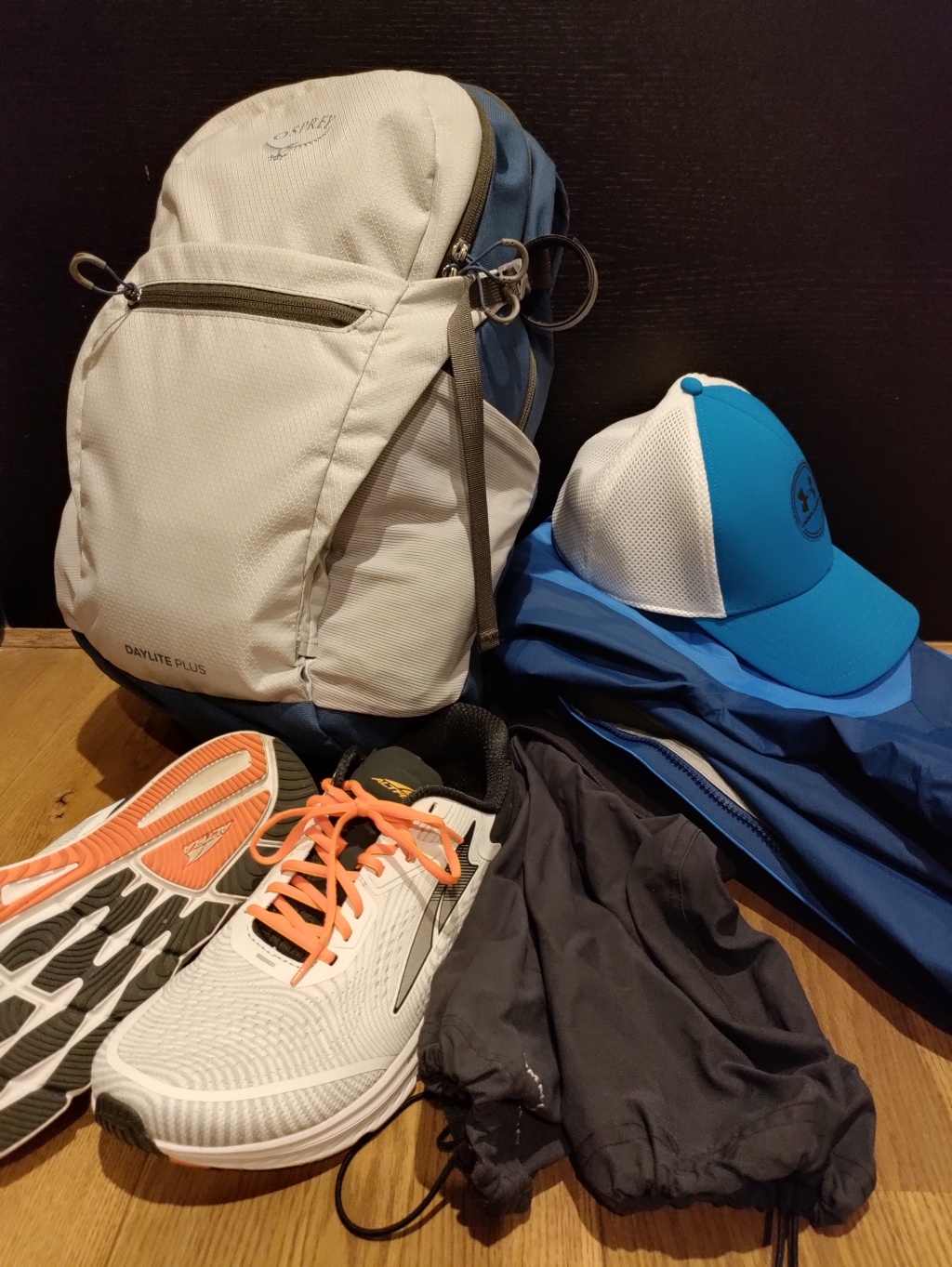
The big 3 things to take for any hike is: shoes, backpack and sleeping gear. The general rule everyone keeps saying is that all of your gear in total should not be more than 10% of your bodyweight. Ideally that also includes water that you will be carrying.
The 10% rule does not make super much sense for obese pilgrims. Then you might want to first lose some weight before even reaching Spain and your knees will thank you later.
I have seen what happens to the feet and knees of pilgrims that are packing 20%+ of their weight with them. A heavy backpack and a bad shoe choice are common reasons why people quit the Camino.
If you really do not know how to pack less, then take 2 backpacks and have the big one sent forward to your next albergue for 8 Euros (https://www.elcaminoconcorreos.com/en/) -> this will only work for the Camino Frances as far as I know. Carry only snacks, water and a jacket in your daypack in that case.
Shoes
I have done a separate blog post going into detail on shoes.
My general recommendation is:
- Between November and February you will want lightweight boots or hiking shoes. An insulating layer inside the shoe is not critical. It might be better to just carry an extra pair of warm socks. This way you can adjust more to the times when you have warmer days on the trail.
- March, April and October are for lightweight hiking shoes, trail runners or road runners with lots of cushioning (especially on the nose section). Waterproofing is optional. I prefer non-waterproof versions and just carry a bit more socks.
- Warm months like May, June, July, August and September are ideal for maximum breathability road runners. Camino trails are not technical 90%+ of the time.
Backpack
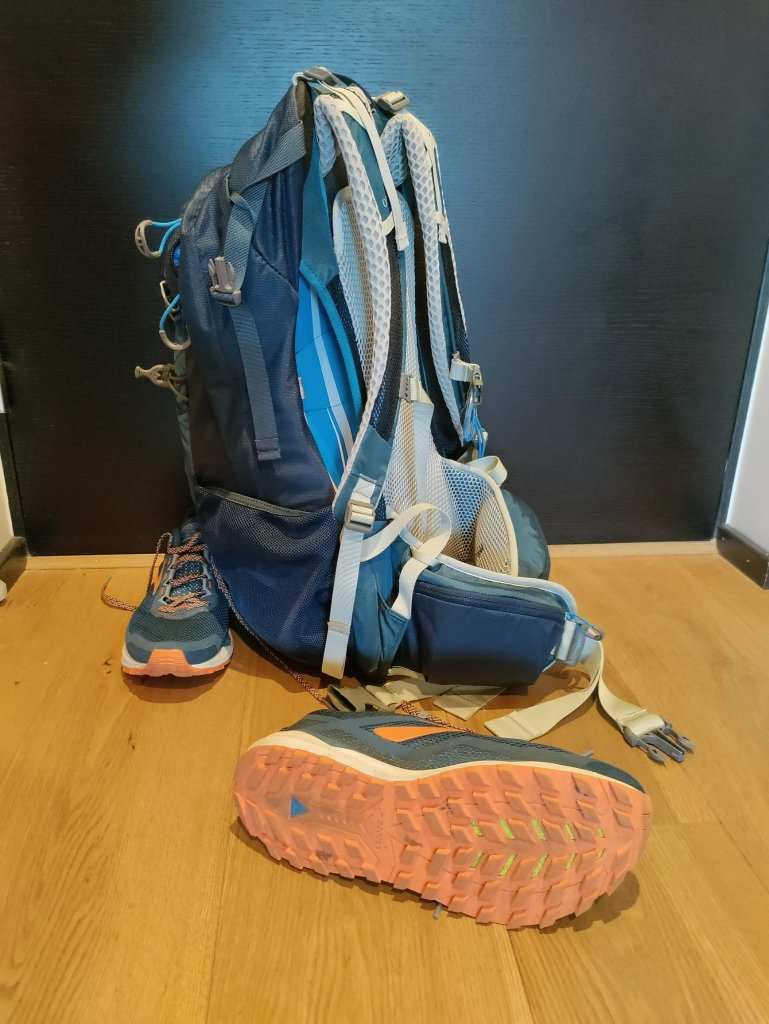
Most pilgrims use around a 32L to 40L size backpack. It really depends on the season you are hiking, because something like a sleeping back will take a ton of space inside the bag.
I did my first Camino with a 30L pack while carrying a laptop and charger cable and still had room left over. Next Camino I managed well with a 24L pack (no laptop anymore). Several last Caminos I have moved down to a 22L already (even in Spring) and still have room left over for extra food and water.
Sleeping gear
You will want a sleeping bag from October to April. May, June, July, August and September when most pilgrims are doing the Camino a sleeping bag will not be necessary. A sleeping bag liner or a light blanket will be fine. It is better to combine warmth for the night with some clean extra clothes that you also use to go around town in the evenings.
Every day on the trail you will finish up in an algergue, hostel or hotel depending on your choice and budget. These places are all usually equipped with warm extra blankets for pilgrims in case they feel cold. Just ask.
My first Camino I did mid summer with a sleeping bag liner and it was somewhat cold inside with just underwear on. On my second in May Camino I took with me a really warm sleeping bag and felt too hot in most of the albergues. On my third Camino in the Summer I used a silk sleeping banket combined with a clean set of clothes for sleeping. This is by far the best option. Sleeping bags take a lot of space in the backpack, warm clothes take a lot less room and have many uses.
I use a silk and merino wool mix blanket for Summer months. Silk will keep the bedbugs away from you and regulates body temperature really well. The blanket adds only 3 to 5 degrees of warmth, therefore you will need to have some additional clothes on. My choice is to have thin socks, lightweight pants and a clean t-shirt for sleeping. The idea is that I can use the same clothes to go for dinner in the village and wear after hiking in general while my other clothes are drying after washing.
Hiking poles
Cheap flight tickets in the EU have only cabin luggage without extra fee. So no hiking poles are allowed. You can have poles in the drop-off luggage if you really feel like you need to carry your own pair around, but it will cost you quite a lot. Its cheaper just to buy a pair of poles at your starting destination.
In Saint-Jean-Pied-de-Port there is a pilgrim store in the old town where you can get your seashell and classical wooden walking stick. In Irun, Pamplona, Leon, Seville, Lisbon or Porto you will find a sporting goods store (Decathlon) with a pair of modern sticks for sale.
You can even pre-order your sticks to many of the Decathlons. For some items the order is ready the next day and can be picked up within 15 days.
There is actually a good chance that an albergue you are passing by will have sticks that are left behind by other pilgrims. Just ask the person running the albergue if there are any pairs that are okay to take. There is a lot of stuff people donate or forget during their Camino that others can use.
For a summer hike I personally have no need for hiking poles or would use maximum just one of them. Having one hand free enables me to use my phone as a flashlight if I start the day before sunrise.
Other stuff
When it comes to clothes you will wear then that will come best with personal experience. You will need a pilgrim passport with you for stamps. Those you can buy at churches or albergues for 3 Euros. Hygene and medical needs you can easily buy along the way. There will be several pharmacies you pass every day. Please do not take something like jeans with you as “airport clothes”, because you will be carrying useless clothes for hiking with you for hundreds of kilometers. Keep it minimalistic, but do not forget to protect yourself and your backpack from rain.
If you have specific bonus clothes that you want to wear just for airport travel, then I suggest you send those ahead to your end destination. A great option is to send the extra stuff to Casa Ivar and pick them up once you reach Santiago. Your knees will thank you later.
My packing list for Camino Norte in May
use Amazon associate links. There will be no extra cost to you, but if you make a purchase then I might get a little back from Amazon.
Additionally, I have some links to Ivar’s shop, because its very Camino specific items and there are also some Decathlon links for hiking sticks because they are not allowed in hand luggage, so I buy them in Spain instead.
Daily wear (1149 grams / 2.5 pounds)
- 1x Brooks Ghost 17 running shoe – 572 grams
- 1x Outdoor Research Echo Hoodie – 150 grams
- 1x Under Armor Vanish Woven Shorts – 120 grams
- 1x Outdoor Research Echo T-shirt – 80 grams
- 2x Outdoor Research Echo Boxer Briefs – 2×51 grams (the other pair for evening + next day)
- 3x Darn Tough Run Coolmax No-Show Tab Ultra-Lightweight socks – 3×30 grams (for everyday hiking use, swap daily during hiking)
- 1x Buff Coolnet UV neck gaiter – 35 grams
Backpack items (2855 grams / 6.3 pounds)
- 1x Salewa Ultra Train 22L backpack – 430 grams
- 1x Frogg Toggs Ultra-Lite2 Poncho – 266 grams
- 1x Plastic water bottle 1L – 10 grams
- + trail snacks for about 2000 calories (I prefer to carry cookies and power bars)
Sleep and evening stuff
- 1x Sea to Summit Reactor Fleece Compact Liner – 390 grams
- 1x Mountain Hardwear Trail Sender Pants – 170 grams
- 1x Xero Shoes Z-Trail EV – 255 grams
- 1x Patagonia Micro D fleece – 190 grams (or any Alpha Direct 90 hoodie)
- 1x Mountain Hardwear Kor AirShell Hoody – 133 grams
- 1x Darn Tough Light Hiker Micro Crew Lightweight with Cushion socks – 58 grams (for cozy sleeping)
- 2x Plastic grocery bags – 5 grams (for keeping everything dry and organized inside the bag)
Hygene
- 1x Sunscreen (purchased in Spain, SPF 50) – 110 grams
- 1x Sea to Summit Drylite Towel M size – 100 grams
- 1x Soap Sheets in Tin – 50 grams (for showers)
- 1x Biodegradable wet wipes – 170 grams (better safe than sorry)
- 1x Nail scissors (purchased in Spain) – 30 grams
- 1x Toothpaste 20ml / 1oz – 28 grams
- 5x Large plasters – 20 grams (Spain will have many pharmacies for more if needed)
- 1x Toothbrush and travel cover – 2×10 grams
- 2x Pairs of earplugs – 5 grams
Electronics
- 1x Phone – 195 grams
- 1x Charger for phone – 120 grams
- 1x Oldskool small wired headphones – 5 grams
Extra stuff
- 1x Passport – 40 grams
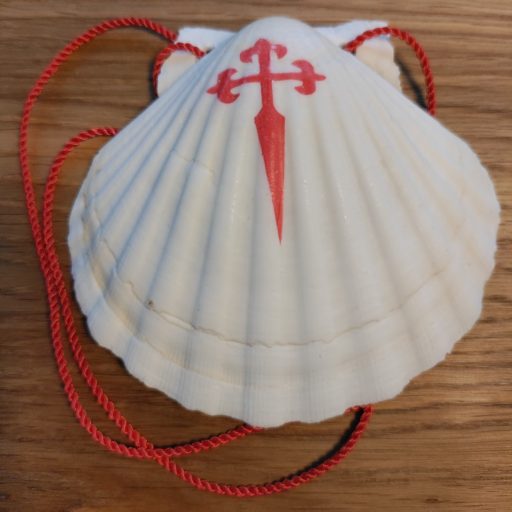
- 1x Camino Pilgrim shell – 35 grams (optional, worn on backpack)
- 1x Camino passport (aka. credential) – 20 grams
Total weight 4.0kg (8.8 pounds)
The days in the summer are long. No headlamp needed. I just use my phone in Flashlight mode and it does not use much of the batteries.

 Camino Pilgrim
Leave a comment