The main difference from Summer season gear is that you need more protection from rain and cold. March, April and October are the rainiest months in Spain. In early March there still might be some snow in the northern mountain passages.
The warm months from May to September you can still manage with Summer hiking gear.
Starting from November you will want to add more warm layers than this packing list shows (mainly for evenings/night). Good thing is that you will not need to carry as much water with you as in the Summer.
Once going more towards the Winter months (November, December, January and February) I highly suggest carrying a thermos with you that has a cup included like the Thermos Stainless King flask 1.2L (0.67 kg / 1.5 lbs). Having a warm cup of the between villages will make the whole Winter experience so much better. The downside of thermoses is that they are quite heavy, but you will really not want to have cold water you during these months.
If you have specific bonus clothes that you want to wear just for airport travel, then I suggest you send those ahead to your end destination. A great option is to send the extra stuff to Casa Ivar and pick them up once you reach Santiago. Your knees will thank you later.
Shoes
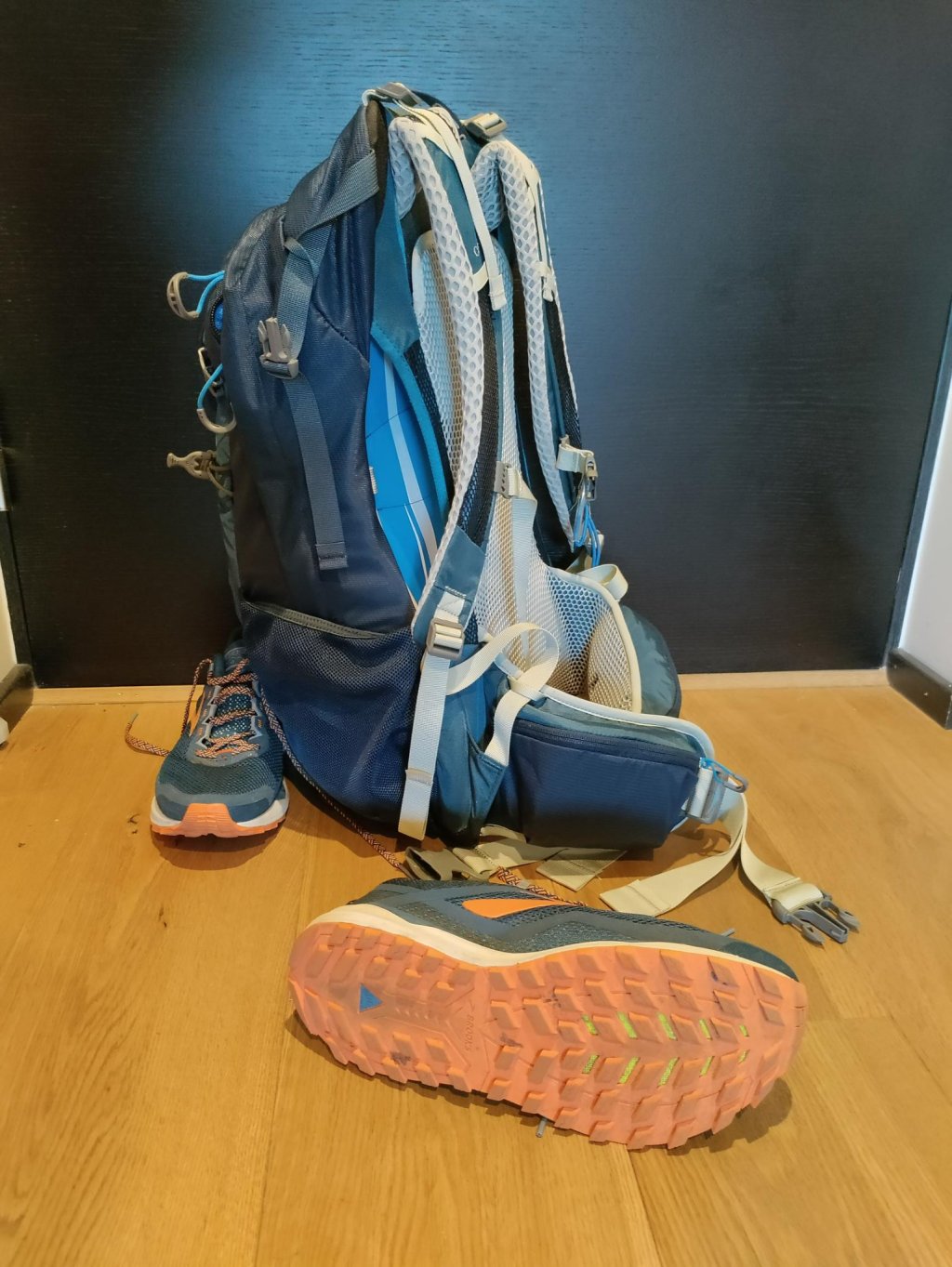
I personally like to walk 30km+ days on average and my feet sweat a lot. The perfect solution for myself is to use either Road Runners or Trail Runners. Most Camino trails are 90%+ on concrete, asphalt and gravel so Road Runners will do just fine.
Because of occasional mud and shallow water obstacles that appear after rain you might want Road Runners with extra stack height (especially in front of the shoe). My personal recommendation is the Brooks Ghost Max series for Spring / Autumn season and Brooks Ghost series for the Summer season.
You might think that it is cold with something that looks like a sneaker, but you can always wear two pairs of socks on those colder days and swap socks out during the day to keep feet dry even on sunny days.
Since you want to hike in March or October the rain does not dry up so fast, so mud and water puddles might become an issue.
If you walk distances less than 20km a day then a pair of waterproof boots might be a good idea instead. For distances longer than that the sweat building up inside a waterproof shoe becomes too much.
The thing about hiking boots (waterproof or not) is that you also need to do several practice hikes at home before Camino to walk them in properly. Sneaker style shoes are good to go from the start.
Please think ahead about the terrain of your Camino before making a final choice on the shoes. Road-to-trail type of shoes are good for all Caminos (if there is a danger of snow on the trail then buy an extra pair of warm socks somewhere for daily walks).
Backpack
For these shoulder seasons people usually carry at least a 40L backpack. A good sleeping bag might take half of that space already, so I suggest to actually bring your gear to the store when choosing a backpack. You will often either need a bigger backpack or a smaller total volume of gear.
Since walking big distances daily is something I enjoy then I will be taking with me a 22L backpack that also leaves plenty of room for the back to breathe while hiking. In reality all the gear I have listed below will not even fill all of this backpack. During the day I usually have about a quarter of the space left over to carry some backup food.
I did try adding a waist bag for convenient pockets and more carrying capacity, but quickly discovered that anything blocking the motion of movement over my hips will make walking much harder. My leg muscles became incredibly sore only after two days of walking the Camino with a fanny pack (without it I walked several hours longer per day with no issues).
Sleeping gear
You will not want a sleeping bag that will weigh more than 1 kilogram (35 ounces). Even though the nights will be cold in Spring and Autumn, then you are still sleeping indoors. Pretty much every albergue will have extra wool blankets that you can add for warmth if needed. The Via de la Plata has pretty much just municipal albergues only and all of them I visited had bonus blankets available.
It might be that in Galicia some albergues do not have extra blankets for pilgrims. You can always has the person running the place about blankets.
If you are worried about being chilly in the evenings, then rather than carrying a heavy sleeping bag, take an extra layer of warm clean clothes that you also wear in the evenings after hiking. Clothes have more uses than a sleeping bag and therefore deliver more value for weight.
If you are really afraid of evening cold, then just add a good down jacket with a good to this list. I suggest any hoodie using new popular material called Polartec Alpha Direct 90 fleece. It works best as an insulation layer because otherwise it can be easily damaged and does not retain the heat as well.
I personally have the Jack Wolfskin Prelight Alpha JKT and I am amazed how much warmth it adds at just 220 grams / 7.8 oz.
Hiking poles
Via de la Plata itself is quite a flat Camino. There are very few intense hill climbs and only one real mountain climb but it goes up quite slowly to the northern border of Extremadura.
You will still want hiking poles to handle all the water obstacles that appear in Spring from rain. The trails get flooded quite quickly and then getting across will require you to jump or walk on random tiny stones. Once a day you might need to walk through cold water without shoes on. Poles will help you cross water without being worried of losing balance that easily.
Poles are also helpful to protect you from dogs, although the most important part is to distance yourself from their herd or territory.
Hiking poles and asphalt tips you can buy online and pick them up in the store in Spain or just visit the store normally, because Forclaz brand is owned by Decathlon itself. Decathlon stores are in pretty much all cities in Spain.
I buy the cheap MT100 versions, you can also consider the MT500 or MT900 versions. Asphalt walking tips need to be purchased separately.
My packing list for Via de la Plata in March
I use Amazon associate links. There will be no extra cost to you, but if you make a purchase then I might get a little back from Amazon.
Additionally, I have some links to Ivar’s shop, because its very Camino specific items and there are also some Decathlon links for hiking sticks because they are not allowed in hand luggage, so I buy them in Spain instead.
Daily wear (1256 grams / 2.8 pounds)
- 1x Brooks Ghost Max 3 – 612 grams
- 1x Under Armor Vanish Woven Shorts – 120 grams
- 1x Outdoor Research Echo T-shirt – 80 grams
- 2x Outdoor Research Echo Boxer Briefs – 2×51 grams (the other pair for evening + next day)
- 2x Darn Tough Light Hiker Micro Crew Lightweight with Cushion socks – 2×58 grams (for cold mornings, rainy days and evening walks)
- 3x Darn Tough Run Coolmax No-Show Tab Ultra-Lightweight socks – 3×30 grams (for everyday hiking use, swap daily during hiking)
- 1x BUFF Midweight Merino Wool Neck Gaiter – 68 grams (also used to cover eyes for sleep)
- 1x Minus33 Merino Wool Ridge Cuff Beanie – 68 grams
Extra layers in the morning (585 grams / 1.3 pounds)
- 1x Mountain Hardwear Trail Sender Pants – 170 grams
- 1x Outdoor Research Echo Hoodie – 150 grams
- 1x Jack Wolfskin Men’s Prelight Alpha JKT 220 grams
- 1x Outdoor Research Vigor Lightweight Sensor Gloves – 45 grams (not waterproof, but can be used as sun gloves if needed)
Backpack items (3492 grams / 7.7 pounds)
- 1x Salewa Ultra Train 22L backpack – 430 grams
- 1x Frogg Toggs Ultra-Lite2 Poncho – 266 grams
- 1x Plastic water bottle 1L – 10 grams
- + trail snacks for about 3000 calories (I prefer to carry cookies and power bars)
Sleep and evening stuff
- 1x Naturehike Ultralight Backpacking RDS Down Sleeping Bag – 567 grams (good cheap option)
- 1x Teva ReEmber Terrain Slip-On – 300 grams
- 1x Patagonia Micro D fleece – 190 grams
- 1x Smartwool Classic Thermal Merino Base Layer Bottom – 228 grams
- 1x Darn Tough Hiker Boot Full Cushion Midweight Hiking Socks – 98 grams (for cozy sleeping)
- 1x Sea to Summit Ultra-Sil Dry Bag 5L – 32 grams (for sleeping bag)
- 2x Plastic grocery bags – 5 grams (for everything else)
Extra stuff
- 1x Passport – 40 grams
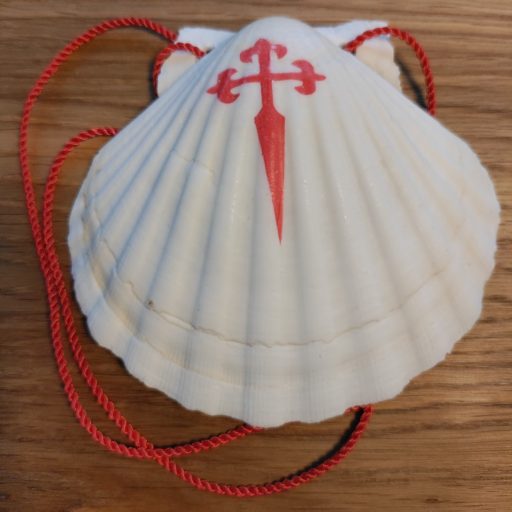
- 1x Camino Pilgrim shell – 35 grams (optional, worn on backpack)
- 1x Camino passport (aka. credential) – 20 grams
- 2x Forclaz MT100 Hiking Poles – 2×200 grams (I buy in Spain)
- 1x Forclaz rubber hiking pole tips – 18 grams (optional, for asphalt)
Hygene
- 1x Sunscreen (purchased in Spain, SPF 50) – 110 grams
- 1x Sea to Summit Drylite Towel M size – 100 grams
- 1x Soap Sheets in Tin – 50 grams (for showers)
- 1x Biodegradable wet wipes – 170 grams (better safe than sorry)
- 1x Nail scissors (purchased in Spain) – 30 grams
- 1x Toothpaste 20ml / 1oz – 28 grams
- 5x Large plasters – 20 grams (Spain will have many pharmacies for more if needed)
- 1x Toothbrush and travel cover – 2×10 grams
- 2x Pairs of earplugs – 5 grams
Electronics
- 1x Phone – 195 grams
- 1x Charger for phone – 120 grams
- 1x Oldskool small wired headphones – 5 grams
Total weight 5.3kg (11.8 pounds)
I did not add to the list, but if you are using hiking poles, then consider a simple headlamp that your phone charger can charge. When walking without poles, I just use my phone in Flashlight mode before sunrise. It does not use much batteries at all.
 Camino Pilgrim
Leave a comment